
After surgery, your body is doing quiet, demanding work — repairing tissue, calming inflammation, and rebuilding strength. Two of the simplest things you can control make an outsized difference: what you drink and what you eat. This issue of the Recovery Journal is a gentle, practical guide to both.
Why Hydration Matters After Surgery
Anesthesia, medications, and the stress of a procedure all leave the body running low on fluids. Steady hydration helps flush anesthesia from your system, keeps circulation moving nutrients to healing tissue, eases constipation from pain medication, and supports skin as incisions recover.
- Sip, don’t chug: Small, frequent sips are easier on a post-op stomach than large glasses.
- Keep water within reach: A filled glass or bottle at the bedside removes the effort of asking.
- Add gentle flavor: A slice of citrus or cucumber can make steady sipping feel effortless.
- Watch the signals: Dark urine, headache, or dizziness are early signs you need more fluids.
Gentle Nourishment: The First 24–48 Hours
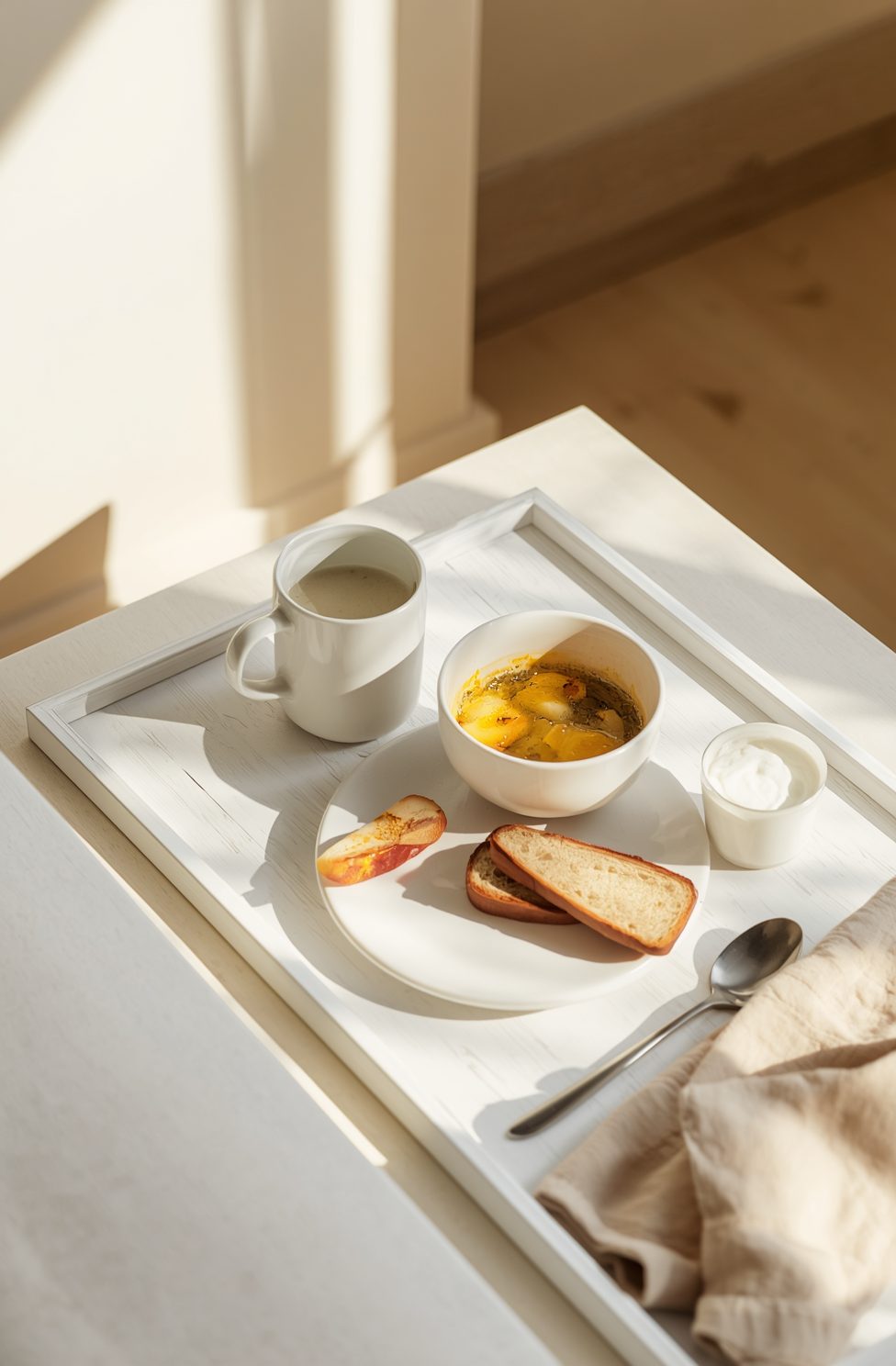
Appetite is often low in the first day or two — that is normal. Start with foods that are warm, soft, and easy to digest: clear broths, herbal tea, yogurt, applesauce, toast, and light soups. The goal is not volume; it is steady, comfortable nourishment that keeps your energy from dipping.
Foods That Support Healing
- Protein: Eggs, yogurt, fish, chicken, and legumes give your body the building blocks for tissue repair.
- Vitamin C: Citrus, berries, and bell peppers support collagen production and immune health.
- Zinc: Nuts, seeds, and whole grains play a quiet but crucial role in wound healing.
- Fiber & fluids: Fruits, vegetables, and plenty of water keep digestion comfortable while activity is low.
“Healing is built from small, repeated acts of care — a glass of water, a warm bowl, a moment of rest.”
A Simple Day of Recovery Eating
- Morning: Warm tea or coffee if tolerated, yogurt with soft fruit, or eggs and toast.
- Midday: Broth-based soup with soft vegetables and shredded chicken, plus steady sips of water.
- Afternoon: A smoothie or a small snack — banana, applesauce, or a handful of soft berries.
- Evening: A light, balanced plate: soft protein, well-cooked vegetables, and a calming caffeine-free tea.

Support Makes It Easier
When a care companion handles the details — refilling the glass before it is empty, preparing meals matched to your appetite, keeping a gentle routine through the day — hydration and nourishment stop being tasks and simply become part of your recovery. That is exactly what our team does, at your home or in one of our recovery suites.

Questions about recovery support? Reach us at info@postsurgicalsuites.com or +1 347-622-7589.